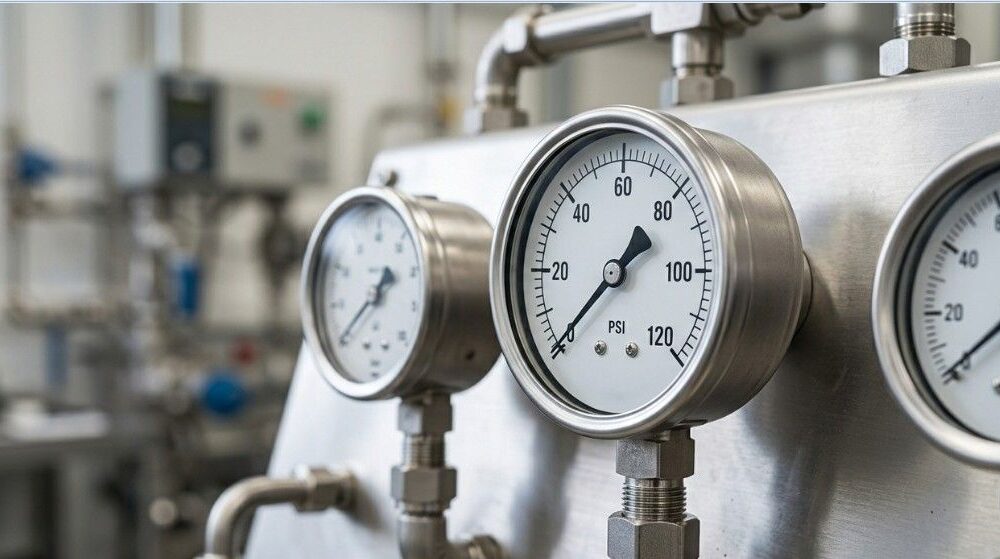
Selecting the right pressure gauge is critical for ensuring safety, accuracy, and efficiency in industrial systems. Whether you are working in manufacturing, oil and gas, water treatment, or HVAC systems, the wrong gauge can lead to inaccurate readings, equipment damage, or even operational failure.
This guide explains what a pressure gauge is, why it matters, how it works, and most importantly how to choose the right one based on your application.
What Is a Pressure Gauge and Why It Matters
A pressure gauge is an instrument used to measure the pressure of gases or liquids within a system. It plays a vital role in monitoring system performance and preventing overpressure conditions.
Industries rely on pressure gauges to maintain compliance with standards such as American Society of Mechanical Engineers and International Organization for Standardization. These standards ensure safety, reliability, and consistency across equipment.
Accurate pressure measurement helps:
- Prevent system failures
- Maintain product quality
- Ensure worker safety
- Optimize operational efficiency
How Pressure Gauges Work?
Most traditional pressure gauges operate using mechanical principles. The most common type is the Bourdon tube gauge, where a curved tube expands when pressure is applied. This movement is translated into a needle reading on a dial.
Digital pressure gauges, offered by companies like WIKA and Ashcroft, use sensors to convert pressure into an electrical signal, providing higher accuracy and easier data integration.
Types of Pressure Gauges
Choosing the right type depends on your application:
1. Bourdon Tube Pressure Gauge
- Ideal for general industrial use
- Durable and cost-effective
- Suitable for medium to high pressure
2. Diaphragm Pressure Gauge
- Best for low pressure and sensitive applications
- Common in chemical and pharmaceutical industries
3. Digital Pressure Gauge
- High precision and easy readability
- Supports data logging and automation systems
4. Differential Pressure Gauge
- Measures pressure difference between two points
- Used in filtration systems and flow measurement
Key Factors to Consider When Choosing a Pressure Gauge
1. Pressure Range
Always select a gauge with a pressure range higher than your system’s maximum operating pressure. Ideally, the working pressure should fall between 30% and 70% of the gauge’s full scale.
2. Accuracy Requirements
Accuracy is crucial in industries like pharmaceuticals and food processing. Look for gauges that meet standards such as ASME B40.100 for precision.
3. Media Compatibility
Ensure the gauge material is compatible with the fluid or gas being measured. For corrosive environments, stainless steel gauges are recommended.
4. Operating Environment
Consider factors like:
- Temperature
- Vibration
- Humidity
For harsh environments, liquid-filled gauges provide better durability and stability.
5. Mounting Type
Common mounting options include:
- Panel mount
- Surface mount
- Bottom or back connection
Choose based on installation requirements and accessibility.
6. Dial Size and Visibility
Larger dials improve readability, especially in industrial settings. Digital displays offer even greater clarity.
7. Standards and Certifications
Ensure compliance with recognized standards such as:
- ASME B40.100
- ISO 9001 manufacturing certification
These indicate reliability and quality assurance.
Applications Across Industries
Pressure gauges are used across multiple sectors:
- Oil and Gas: Monitoring pipelines and drilling systems
- Manufacturing: Controlling hydraulic and pneumatic systems
- HVAC: Ensuring proper refrigerant pressure
- Water Treatment: Managing filtration and pumping systems
Each application may require a specific type of gauge with tailored features.
Importance of Warranty and After Sales Support
A reliable pressure gauge supplier should offer:
- Product warranties
- Calibration services
- Technical support
- Spare parts availability
Common Mistakes to Avoid
- Choosing the wrong pressure range
- Ignoring environmental conditions
- Selecting incompatible materials
- Overlooking calibration requirements
Avoiding these mistakes can significantly extend the life of your equipment and improve system performance.
Media Compatibility and Material Selection
Choosing the right material for your pressure gauge is essential for durability and accuracy. For standard industrial applications with non corrosive media like air or water, MS pressure gauges are a cost effective and reliable choice, widely used in general manufacturing and utility systems.
For more demanding environments involving chemicals, moisture, or harsh conditions, SS Pressure Guages provide superior corrosion resistance and long term performance. Industries such as oil and gas and chemical processing rely on these materials to ensure safety and efficiency, especially when sourcing from trusted suppliers like Luluat Al Noor, serving the MENA region and Africa.
AI overview
Choose the right pressure gauge by evaluating range, accuracy, environment, and type to ensure safe, reliable, and efficient industrial performance.
FAQs
What is the most common type of pressure gauge?
The Bourdon tube pressure gauge is the most widely used due to its durability and cost effectiveness. It suits most industrial applications.
How do I know the right pressure range for my gauge?
Choose a gauge where normal operating pressure is 30% to 70% of full scale. This ensures accuracy and longevity.
Are digital pressure gauges better than analog?
Digital gauges offer higher accuracy and easier readability. However, analog gauges are more durable in harsh environments.
How often should a pressure gauge be calibrated?
Calibration is typically recommended every 6 to 12 months. Frequency depends on usage and industry standards.
What materials are best for corrosive environments?
Stainless steel pressure gauges are ideal for corrosive media. They provide durability and resistance to chemical damage.
Conclusion
Choosing the right pressure gauge requires a clear understanding of your system, operating conditions, and compliance with pressure gauge accuracy standards like ASME B40.100. From selecting the correct pressure gauge range to choosing between a bourdon tube pressure gauge for industrial use or a high accuracy digital pressure gauge, each decision directly impacts safety and efficiency. For specialized needs, such as filtration systems, a differential pressure gauge ensures accurate monitoring and control.
Partnering with trusted suppliers like Luluat Al Noor, serving the MENA region and Africa, ensures access to ISO certified pressure gauges, proper calibration, and reliable pressure measurement solutions for long term performance.
For tailored recommendations, technical specifications, and after sales support, engaging with reputable pressure instrumentation provider ensures optimal selection and long term system reliability.
Discover guides on Industrial Tools, Safety Equipment, and Building Materials.
- The Essential Guide to Industrial Safety Equipment: Ensuring reliability, compliance, and performance in every industrial operation
- A Complete Guide to Adhesives: Types, Forms & Applications: Explore versatile adhesives for every industrial and commercial application.
- What Are Compression Fittings and How They Work: Secure, leak proof connections made simple with compression fitting technology.
- Top 10 Types of Building Materials Used in Construction: Essential materials shaping modern construction projects.
- Types of Grease Fittings (Zerk Fittings): Complete Guide: Ensuring smooth lubrication and reliable machinery performance with Zerk fittings.